


Today we're introducing Fuyu, a privacy protocol that lets institutions hold assets, trade, and prove compliance on public blockchains without exposing their books.
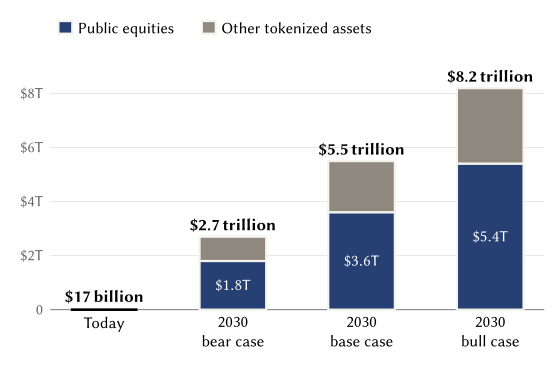
Wall Street is moving onchain. In September the SEC issued an innovation exemption for trading tokenized stocks onchain. Citi's base case has tokenized assets growing from about $17 billion today to $5.5 trillion by 2030, two thirds of it in stocks.
Public blockchains were not built for this kind of money. Every balance and every payment is visible to anyone, and the record never goes away. An address may not carry a name, but an exchange deposit or a public filing is usually enough to link it to its owner, and from then on competitors can follow the fund's positions and trades. Full secrecy is no answer either, because lenders, auditors, and regulators need facts they can verify.
Fuyu is built to give institutions both. Their assets sit in a shielded pool on Ethereum, where the chain verifies every transaction without learning who paid whom or how much. They can still trade on Uniswap, Aave, and other public venues, with the proceeds returning straight to their private accounts, and no single operator can block or redirect them.
Compliance is part of the protocol. A lender or auditor writes its questions in the Fuyu Policy Language, such as whether a fund holds at least $1 million in USDC, and the fund answers with a zero-knowledge proof made on its own device. The auditor checks the proof in about a third of a second and learns the answer and nothing else. Every answer it accepts is mathematically guaranteed to hold on the fund's complete history, and the language can express common compliance questions, from FATF anti-money-laundering guidance to the SEC's accredited investor rules and loan covenants.
That protection is built to last. Because the record is permanent, Fuyu encrypts payment details with ML-KEM, the post-quantum standard NIST published in 2024, so they stay private even against a future quantum computer. Unlike Tornado Cash, Privacy Pools, RAILGUN, and Privacy Boost, Fuyu combines trading, zero-knowledge proof of funds, and post-quantum privacy.
| yes partly no | Tornado Cash | Privacy Pools | RAILGUN | Privacy Boost | Fuyu |
|---|---|---|---|---|---|
| Private transfers | |||||
| DeFi applications | |||||
| Decentralization | |||||
| History hidden from third parties | |||||
| Zero-knowledge proof of funds | |||||
| Private against a chain analyst | |||||
| Private against a future quantum computer | |||||
| Exit window before upgrades |
Fuyu is the only one with the highest privacy guarantee in every row.
Privacy on Fuyu also comes without a premium. A private trade costs about 10% less than on RAILGUN, the state of the art for private trading on Ethereum, so institutions keep their books private and pay less to do it.
We believe Fuyu is a key step toward moving institutional finance onchain. It lets institutions bring their assets to public blockchains while keeping the two things they rely on today, private books and compliance they can prove. The whitepaper lays out the full design, and in the coming weeks we will walk through each of its steps here, one post at a time.
Join our waitlist today and be among the first to use Fuyu.